
Human Sandbox: Ragdoll Play
GrassBlock StudioSimulation
4.6148.00 Reviews
- Version
- 1.2.5
- Installs
- 5.00M
- Age Rating
- Teen
Screenshots
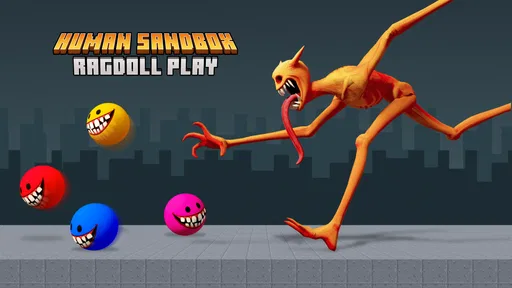
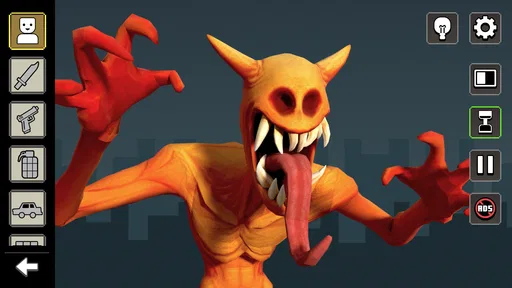
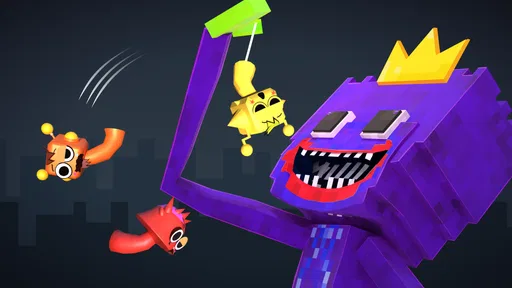
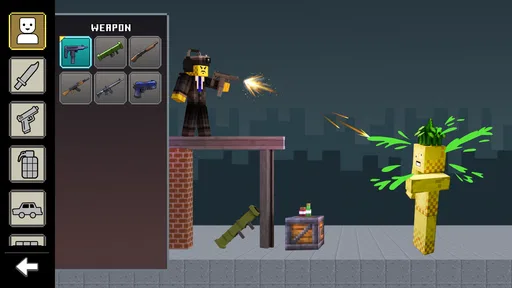
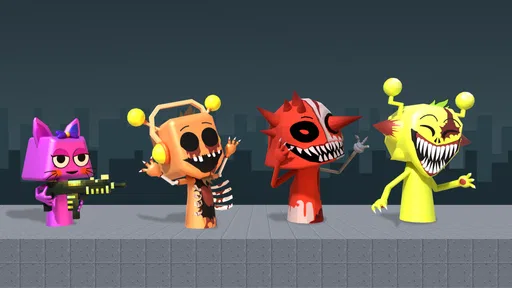
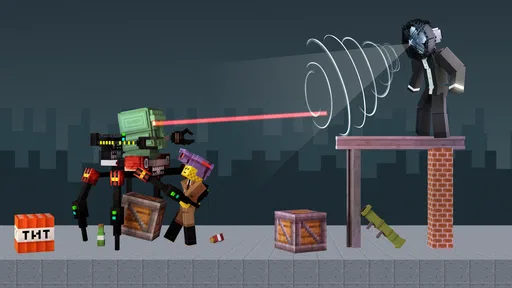
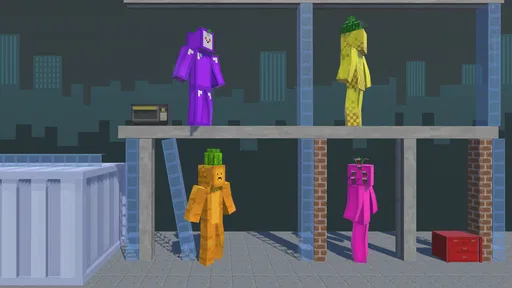
Our Review of Human Sandbox: Ragdoll Play
 Analysis by Appyee
I went into Human Sandbox: Ragdoll Play expecting a simple physics toy, and that is exactly where its appeal begins. It is a free 3D simulation game from GrassBlock Studio built around a human sandbox, monster-like figures, and ragdoll reactions that are fun to watch, arrange, and repeat. The first few minutes are less about winning than about learning what happens when I place characters, create a little scene, and let the physics take over.
That relaxed purpose matters. This is not a conventional action game with a campaign pushing me from one objective to the next. It is closer to a digital playground where I decide whether I want a quick laugh, a small experiment, or a longer session spent adjusting a setup until the result looks right. The game has earned a 4.6 average from around ten thousand ratings and has passed five million installs, so it clearly connects with players who enjoy this kind of open-ended amusement.
My overall impression is positive, with one important qualification: the experience depends heavily on whether you enjoy creating your own reasons to keep playing. If you need a clear story, carefully balanced challenges, or a strong progression system, this may feel empty. If you like watching simulated characters tumble, collide, and produce unexpected scenes, its simple structure becomes a strength rather than a weakness.
A playground where the visual language does most of the talking
The art direction is built around readability rather than realism. The figures and objects need to be easy to identify while they are moving, falling, and reacting, and the 3D presentation supports that goal. I never felt that the visual style was trying to disguise the game as a serious combat simulator. Instead, it frames the characters as pieces in a playful experiment.
That choice gives the setting a coherent mood. The world feels like a stage prepared for testing cause and effect. A character placed in one position can become the center of an entirely different scene once movement begins. The appeal is not a detailed fictional universe; it is the contrast between a controlled setup and an uncontrolled result.
I found that the game works best when I treated each arrangement as a tiny visual composition. Rather than immediately throwing everything into the scene, I could start with a simple placement, observe the reaction, and then change one element. That approach makes the physics easier to understand and also produces more interesting outcomes than random tapping.
One useful habit is to think in terms of timing. If I create a crowded setup at once, the result can become visually noisy, making it difficult to understand why a character moved or fell. A smaller arrangement gives each reaction more room to read. This is one of the less obvious strengths of the game: it rewards restraint, even though its subject matter encourages chaos.
The visual style also makes it approachable for short sessions. I do not need to remember a complicated story or rebuild a long-term strategy after a break. I can open the game, make a scene, watch it unfold, and leave. That makes it a natural choice for a quick pause during the day, especially when I want something interactive but not mentally demanding.
There is a trade-off, though. Players who judge a simulation by the depth of its environments may find the presentation modest. The setting exists mainly to support the sandbox behavior, not to provide exploration in the way a large adventure game would. I would not choose this for detailed world-building or a rich narrative atmosphere.
Why the setting works better as a stage than as a world
The most successful part of the setting is its neutrality. Because the environment does not impose a heavy story, I can decide what a scene means. A short session might be a slapstick experiment, a carefully arranged chain reaction, or simply a test of how the ragdoll behavior looks from a different setup. The game leaves that interpretation to me.
This also explains why the title is more appealing to some players than others. In a traditional simulation, I might expect responsibilities, resources, or a structured system to manage. Here, the simulation is about physical behavior and visual consequences. The satisfaction comes from seeing an arrangement produce a result, not from building a permanent operation.
For younger players, the Teen content rating is worth considering before installing. The game’s playful presentation may make it look harmless at a glance, but the central attraction is still monster ragdoll physics, so it is better suited to players comfortable with that style of simulated action.
The developer, GrassBlock Studio, keeps the concept focused. I did not come away thinking the game was trying to be several genres at once. Its identity stays tied to the sandbox playground idea, and that focus helps the art direction, setting, and physics feel like parts of the same experience.
Sound, pacing, and the pleasure of watching a setup unfold
In a game like this, sound has a different job from sound in a story-driven adventure. It does not need to carry dialogue or explain a complicated plot. Its role is to give movement a sense of impact and help the scene feel active while the physics are doing the main work.
That makes pacing especially important. The game is most enjoyable when I have enough time to understand the setup before the action becomes chaotic. A scene that develops in stages gives me a clearer sense of cause and effect. When everything happens immediately, the result may still be amusing, but it becomes harder to appreciate the details.
I recommend approaching each session with a small experiment in mind. For example, I might place one character, observe the initial movement, and then introduce another element. This creates a rhythm of setup, release, observation, and adjustment. It is more satisfying than treating every attempt as a one-button spectacle.
That rhythm is also why the game can feel calming despite its physical comedy. I am not constantly reacting to enemies or racing against a countdown. I can pause mentally between experiments, decide what to change, and try again. The mood is playful and slightly mischievous rather than tense.
Still, the pacing is not for everyone. Players who want immediate goals may interpret the open-ended structure as a lack of momentum. There are moments when I wanted a clearer reason to continue beyond curiosity. The game can supply that reason if I enjoy refining scenes, but it does not force it on me.
One practical tip is to use the game as a short-form activity instead of expecting a long uninterrupted session. Its strongest moments often come from a handful of experiments rather than an extended grind. If I stay too long without changing my approach, the novelty can fade because the basic pleasure remains observation rather than progression.
This is where it differs from many familiar simulation alternatives. A management simulator usually builds tension through schedules, money, upgrades, or failure states. A physics sandbox such as this one creates interest through surprise. The question is not whether I can optimize a business or complete a route; it is whether I can create a setup that behaves in an entertaining way.
The sound and visual balance in everyday play
I found the game easy to fit into an ordinary routine because its mood does not demand complete concentration. A realistic example would be opening it while waiting for an appointment, making a few arrangements, and watching the results without committing to a lengthy mission. It works particularly well when I want a visual distraction that still lets me make decisions.
At home, I would be more selective. If I have time for a deeper session, a game with stronger progression may provide more lasting structure. Human Sandbox: Ragdoll Play is better when I want to experiment freely than when I want to feel that I have advanced toward a major goal.
How the mechanics support the mood
The central mechanical fit is clear: the ragdoll physics are not a side feature added to another genre. They are the reason to play. Every placement and interaction is valuable only because it can create a different physical response. That keeps the mechanics aligned with the art direction and the sandbox setting.
I especially liked the difference between planning and surrendering control. I can arrange a scene with an intention, but the final movement may not match what I imagined. That gap creates the game’s main form of replayability. I am not replaying to memorize a perfect solution; I am replaying to see whether a small change creates a better result.
For more consistent experiments, I suggest changing one variable at a time. If I alter the position of several characters and objects together, I may get a surprising outcome but learn very little from it. By making controlled adjustments, I can discover which part of the arrangement caused the reaction. This turns casual play into a basic physics observation exercise without making it feel like homework.
Another useful approach is to separate “performance” from “testing.” During a performance, I can focus on making a visually funny or dramatic scene. During testing, I can repeat a setup and watch for differences. Keeping those goals separate prevents frustration when a playful experiment does not produce a clean result.
The mechanics are also a good fit for players who enjoy emergent behavior. The fun is not always in a polished animation or a predetermined event. It comes from watching pieces interact in a way that feels partly planned and partly accidental. That makes the game more personal than a standard sequence of scripted levels.
However, this same openness creates the biggest limitation. Without a strong external objective, the game relies on self-directed curiosity. Once I have explored the types of scenes I personally find entertaining, I may need to invent new rules to keep the experience fresh. Some players will enjoy that freedom; others will see it as a sign that the game needs more structure.
The free price makes it easy to try without a financial commitment. Optional in-app purchases are listed at $2.49 per item, so I would still recommend checking each purchase carefully before confirming it, especially if the game is being used on a shared device. The free entry point is a genuine advantage, but it does not remove the need to pay attention to optional spending.
The current version is 1.2.5 and it runs on Android 7.1 or later. That broad compatibility makes it accessible to people using older supported devices, although physics-heavy scenes can naturally be more demanding than a static puzzle. I would keep arrangements reasonably simple if a phone begins to feel less responsive during busy experiments.
Who should play it, and who should choose something else
I would recommend this game to players who enjoy sandbox simulations, ragdoll comedy, and making their own small challenges. It is particularly suitable for someone who likes to observe systems rather than chase a score. It can also work for creative players who enjoy staging scenes and repeating them with slight changes.
I would skip it if I need a campaign, character development, competitive ranking, or a clear upgrade path. A conventional simulation game will be a better choice when the appeal comes from managing resources and seeing long-term progress. A physics puzzle game may also be more satisfying if I want each level to provide a carefully designed problem with a definite solution.
Parents and guardians should also consider the Teen rating rather than relying only on the colorful presentation. The game’s focus on ragdoll figures and monster-themed physical reactions is central to its identity, so it should be chosen with the intended player in mind.
For someone deciding whether to install it, my advice is simple: ask whether watching an unexpected physical result sounds entertaining even when there is no formal reward attached. If the answer is yes, the game has a good chance of holding your attention. If the answer is no, the free price alone is unlikely to make the experience worthwhile.
My atmosphere verdict after spending time in the sandbox
Human Sandbox: Ragdoll Play succeeds because its parts point in the same direction. The visual design presents a readable stage, the setting leaves room for experimentation, the sound and pacing support observation, and the ragdoll mechanics supply the actual reason to return. Nothing needs to be interpreted as a grand adventure; the mood is built from small scenes and unpredictable movement.
My favorite way to play is to begin with a restrained setup, watch what happens, and then introduce one change at a time. That workflow reveals more than simply filling the screen with activity. It also makes the game feel less disposable, because I am not only consuming random motion; I am learning how to create a better scene.
The limitations are equally clear. The open-ended design can run out of energy for players who need structured objectives, and the setting is functional rather than richly explorable. The experience is best understood as a playful physics studio, not a full simulation career or narrative game.
GrassBlock Studio has delivered a focused free simulation for Android users on supported versions, and its strong average rating reflects the appeal of that focused idea. I would recommend giving it a try if you want a low-pressure sandbox that turns simple arrangements into visual surprises. The key trade-off is freedom versus direction: you get room to invent your own fun, but you must also provide the reason to keep experimenting.
For me, that is enough to make it worth keeping around for short, curious sessions. I would not replace a deeper simulation or a goal-driven game with it, but I would reach for it when I want to create a scene, let the physics take over, and enjoy the result without pressure.
Verdict
Strengths of Human Sandbox: Ragdoll Play
- Simple controls make it easy to experiment with ragdoll physics.
- Large sandbox areas encourage creative and unpredictable setups.
- Many objects provide variety for building custom scenarios.
- Physics reactions are entertaining and satisfying to watch.
- Can be played casually without requiring a constant internet connection.
Limitations of Human Sandbox: Ragdoll Play
- Frequent ads may interrupt gameplay, especially between experiments.
- Some objects and features may require in-app purchases to unlock.
- Ragdoll movement can occasionally look glitchy or unnatural.
- The gameplay may feel repetitive once the main tools are familiar.
- Performance can drop when many objects are active at once.
Similar Picks in This Category
View All
Truckers of Europe 3
Wanda Software4.3

Town Building Life Simulator
XGame Global4.2

Fidget Toys Trading・Pop It 3D
Freeplay Inc4.7

Sculpt People
CrazyLabs LTD4.4

Scary Teacher 3D
Z & K Games4.2

Hair Tattoo: Barber Shop Game
CASUAL AZUR GAMES4.3
Frequently Asked Questions
What is Human Sandbox: Ragdoll Play?
Human Sandbox: Ragdoll Play is a physics-based sandbox game focused on experimenting with ragdoll characters, objects, tools, and environmental interactions. Rather than following a traditional story or completing a fixed campaign, you create your own scenes and test how characters react to different setups. The appeal comes from its open-ended gameplay, surprising physics, and the freedom to experiment at your own pace.
Is Human Sandbox: Ragdoll Play suitable for children?
The game may look simple and cartoon-like, but its ragdoll experimentation can include crashes, traps, falls, and other forms of simulated violence. Parents should review the game’s store rating, screenshots, and available safety settings before allowing younger children to play. It is best suited to users who understand that the gameplay is based on physics experiments rather than a conventional family-friendly adventure.
Does Human Sandbox: Ragdoll Play require an internet connection?
Many sandbox features in Human Sandbox: Ragdoll Play can generally be enjoyed offline after the game has been installed, which makes it convenient for travel or areas with limited connectivity. However, internet access may still be needed for downloading the app, receiving updates, viewing advertisements, or using certain online-related features. Requirements can vary depending on the version installed on your device.
Is Human Sandbox: Ragdoll Play free to download and play?
Human Sandbox: Ragdoll Play is typically available as a free download, allowing players to try its basic sandbox gameplay without an upfront purchase. Like many free mobile games, it may include advertisements, optional purchases, or locked content that can be accessed through additional payments. Before downloading, check the official store listing for the current pricing, in-app purchase details, and advertising information.
What devices are compatible with Human Sandbox: Ragdoll Play?
Compatibility depends on the operating system, device model, available storage, and the minimum software version required by the developer. The game is designed for mobile play, but older phones or tablets may experience slower performance, longer loading times, or occasional crashes when many objects are active at once. Check the Google Play or App Store listing before installation to confirm your device meets the requirements.
Play our best games!


